-1.png?width=3330&height=698&name=TGP%20International%20Logo%20White%20(1)-1.png "TGP International logo")
Food and beverage shapes how people move through cities, hotels and mixed-use developments. It influences whether ground floors remain active beyond working hours, whether visitors extend their stay and whether communities feel represented within a place.
Because of its visibility and scale, F&B also influences employment patterns, supply chains and resource use. In many projects, it becomes one of the most public expressions of a development’s ESG commitments.
Its impact, however, is not automatic. Inclusive social value and environmental responsibility depend on how strategy, leasing, design and operations are structured from the outset.
Industry Context
- Active ground-floor uses, including food and beverage, are associated with increased pedestrian dwell time and perceived safety in public space, reinforcing the role of F&B in placemaking outcomes — Project for Public Spaces
- Public markets and curated food environments strengthen local economic circulation, supporting small business formation and cross-cultural exchange while acting as social anchors within neighbourhoods — Project for Public Spaces, Why Public Markets Matter
- Food waste represents 8–10% of global greenhouse gas emissions, making structured waste measurement and kitchen efficiency central to environmental performance in hospitality operations — UNEP, Food Waste Index Report
- Food systems are responsible for around one-third of global greenhouse gas emissions, linking sourcing, waste and menu design directly to climate impact — FAO, State of Food Security and Nutrition
F&B as the Backbone of Inclusive Urban Places
Great places are built around shared experiences. Restaurants, cafés, markets and food halls create rituals of gathering that cut across age and background.
When F&B is integrated early within urban planning strategies, it helps shape multi-use neighbourhood hubs that operate throughout the day and into the evening. These spaces naturally support inter-generational interaction, welcoming families, young professionals and older residents in equal measure.
Thoughtful curation also enables cross-cultural exchange. A balanced mix of local independents and established brands can reflect the identity of a community while introducing new influences. Combined with well-designed public realm, F&B creates environments that feel safe and inclusive. In this context, food and drink are the social glue.
Read: How Food and Beverage Strategy Drives Urban Regeneration and Placemaking
Case Study – London Southbank Centre Food Offer Strategy
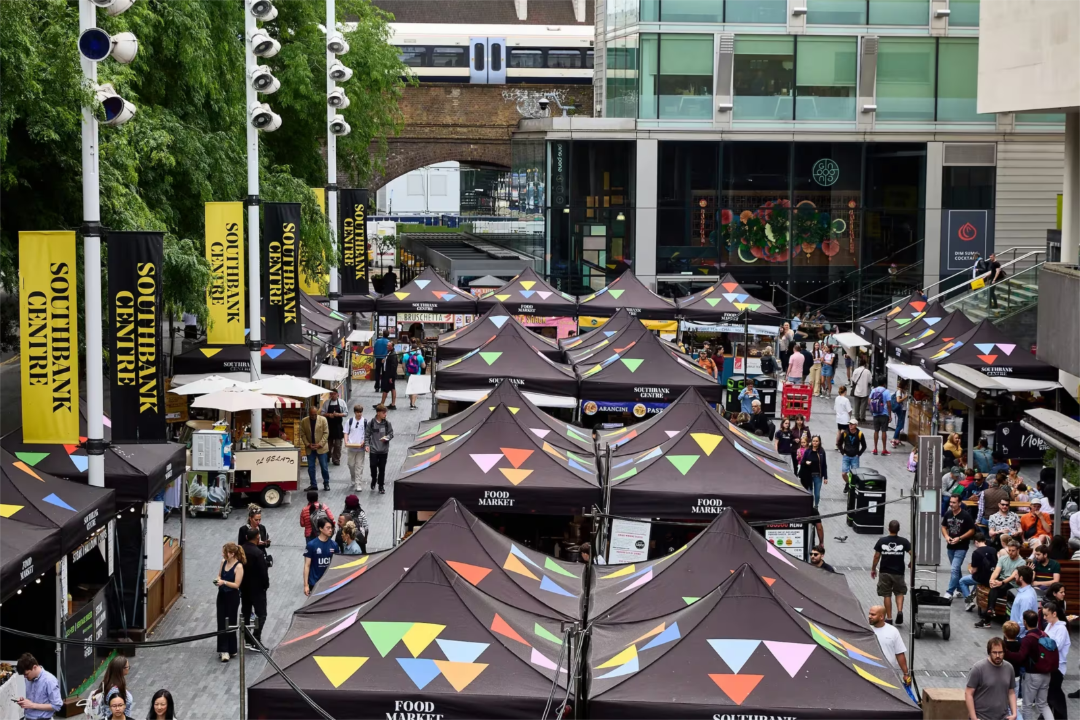
Southbank Centre sits among London’s most visited cultural destinations, recording about 3.7 million visits in 2024, ranking it fifth overall among UK attractions. This sustained visitation reflects the Centre’s role as a multi-use urban destination, where cultural programming, public space and hospitality amenities operate in concert.
Each weekend, the Southbank Centre Food Market and adjacent cafés and bars activate public space alongside performance venues such as the Royal Festival Hall and Hayward Gallery. The market brings together more than 30 independent traders and a diverse range of cuisines, extending the precinct’s daypart activity and broadening local participation alongside visiting audiences.
Evaluations of the wider South Bank district show consistently high footfall across cultural and commercial uses, including spikes during seasonal programming and market activations. Integrating curated F&B within this framework reinforces how food offers can contribute to placemaking metrics such as dwell time, repeat visitation and neighbourhood engagement without operating in isolation from core cultural assets.
Creating Career Pathways and Supporting Entrepreneurship
Hospitality remains one of the most accessible sectors for entry into the workforce. With the right strategy, it becomes a platform for long-term career progression and economic mobility. Partnerships with local colleges, structured apprenticeship programmes and leadership development pathways can transform entry-level roles into sustainable careers. This approach strengthens retention while building a skilled and loyal workforce.
At the same time, developments have an opportunity to lower barriers for independent operators and emerging talent. Flexible leasing structures and phased financial models can reduce risk for entrepreneurs who might otherwise be excluded from prime locations.
Incubator kitchens and short-term residencies provide stepping stones for new concepts to test and refine their offer. By supporting diverse ownership and local talent, F&B ecosystems retain authenticity and circulate economic value within the community.
Read: How Does F&B Create Value in Urban and Hospitality Projects?
Embedding ESG from Concept to Operation
Delivering meaningful impact requires ESG principles to be embedded from the earliest stages of concept development.
Sustainability cannot sit as a late-stage overlay. It must inform leasing strategy, operator selection, design standards and operational frameworks.
The table below outlines how environmental, social and governance principles translate into practical hospitality decisions.
|
Environmental |
Managing energy intensity, material impact and supply chain footprint within hospitality operations |
• Energy-efficient commercial kitchen design and equipment specification • Ventilation and workflow planning that reduces load and improves efficiency • Electrification strategies aligned with local grid capacity • Low-impact material selection and circular fit-out considerations • Menu engineering and procurement frameworks aligned with seasonal and regional supply • Structured food waste measurement integrated into operational KPIs |
|
Social |
Structuring F&B environments to broaden access, create employment pathways and reflect local context |
• Curated tenant mix balancing independents and established brands • Price architecture that supports multiple customer segments • Inclusive interior design standards and accessible layouts • Flexible spaces that accommodate community programming • Workforce development frameworks and apprenticeship pathways • Leasing models that lower barriers for emerging operators |
|
Governance |
Embedding measurement, accountability and operational discipline across assets |
• Defined ESG KPIs such as waste per transaction and staff retention rates • Transparent reporting structures aligned with investor requirements • Clear operator performance criteria within management agreements • Asset-level oversight linking ESG performance to commercial outcomes • Ongoing review of supplier standards and procurement compliance |
Read: Sustainability & Inclusivity in Hospitality, Insights from Industry Leaders
Strengthening Supply Chains and Building Resilience

Resilient places depend on resilient supply networks. Prioritising regional producers and transparent sourcing strategies reduces transport emissions while reinforcing local economies. Shorter supply chains often provide greater reliability and traceability, strengthening relationships between operators and producers. This interconnected model benefits both commercial stakeholders and the communities in which they operate.
In a climate of economic uncertainty and regulatory change, this level of integration builds long-term stability. It aligns environmental responsibility with operational resilience, ensuring that sustainability supports commercial performance rather than constrains it.
long-term stewardship model that positions developments as active contributors to community life.
Commercial Success and Community Custodianship
Well-curated F&B environments influence dwell time, brand perception and revenue performance. In hotel contexts, they contribute to broader metrics such as TREVPAR and total guest spend. In mixed-use developments, they shape rental confidence and asset identity.
Environmental efficiency can reduce operational expenditure. Workforce stability supports service standards. Distinctive tenant mix enhances differentiation. Where these factors are aligned, commercial and community objectives reinforce one another.
Food and beverage affects how places are experienced on a daily basis. Its social, economic and environmental impact is highly visible. The question is not whether F&B contributes to ESG outcomes, but how intentionally it is structured to do so.
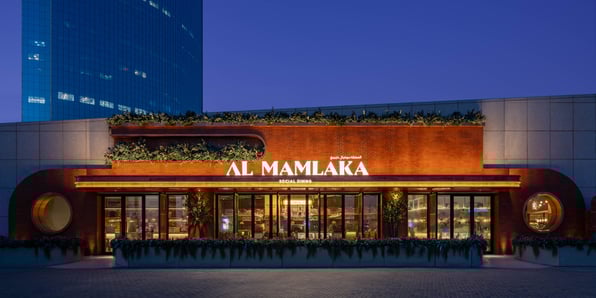
Case Study – Al Mamlaka Social Dining
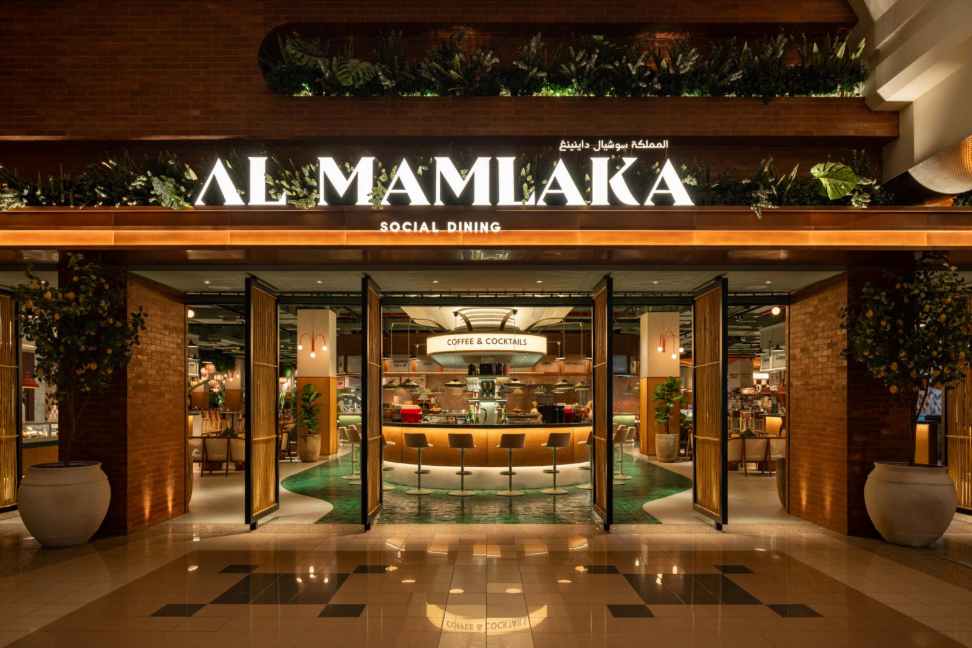
Al Mamlaka Social Dining was developed as a curated F&B hub within a major retail destination, designed to operate as shared social infrastructure rather than a conventional food court. The strategy focused on tenant mix, spatial design and operational coordination to create a destination that encouraged longer dwell time and broader participation across customer segments.
From a social perspective, the curated blend of operators supported brand diversity while maintaining a cohesive identity. Shared seating and open circulation were designed to reduce fragmentation and encourage interaction across age groups and backgrounds. By positioning F&B as a central gathering space, the development strengthened local capture and extended trading patterns beyond peak retail hours.
Operationally, the hub model allowed for coordinated back-of-house planning, structured procurement and clearer performance oversight. This reduced duplication across units and improved efficiency at asset level. The result illustrates how F&B, when approached as an integrated ecosystem rather than a collection of individual leases, can contribute to commercial performance while reinforcing inclusivity and long-term resilience within a destination environment.
Collaboration as the Catalyst for Impact
Meaningful ESG outcomes cannot be delivered in isolation. Developers, F&B specialists, urban planners and public sector stakeholders must align around shared objectives from the outset. Early collaboration allows environmental benchmarks, social value targets and commercial frameworks to reinforce one another.
When governance structures are clearly defined and impact is measured consistently over time, ESG becomes embedded within the lifecycle of a place.