-1.png?width=3330&height=698&name=TGP%20International%20Logo%20White%20(1)-1.png "TGP International logo")
Events,
Operational Management,
UAE,
Marketing & PR,
Graphic Design & Branding,
Brand & Concept Development
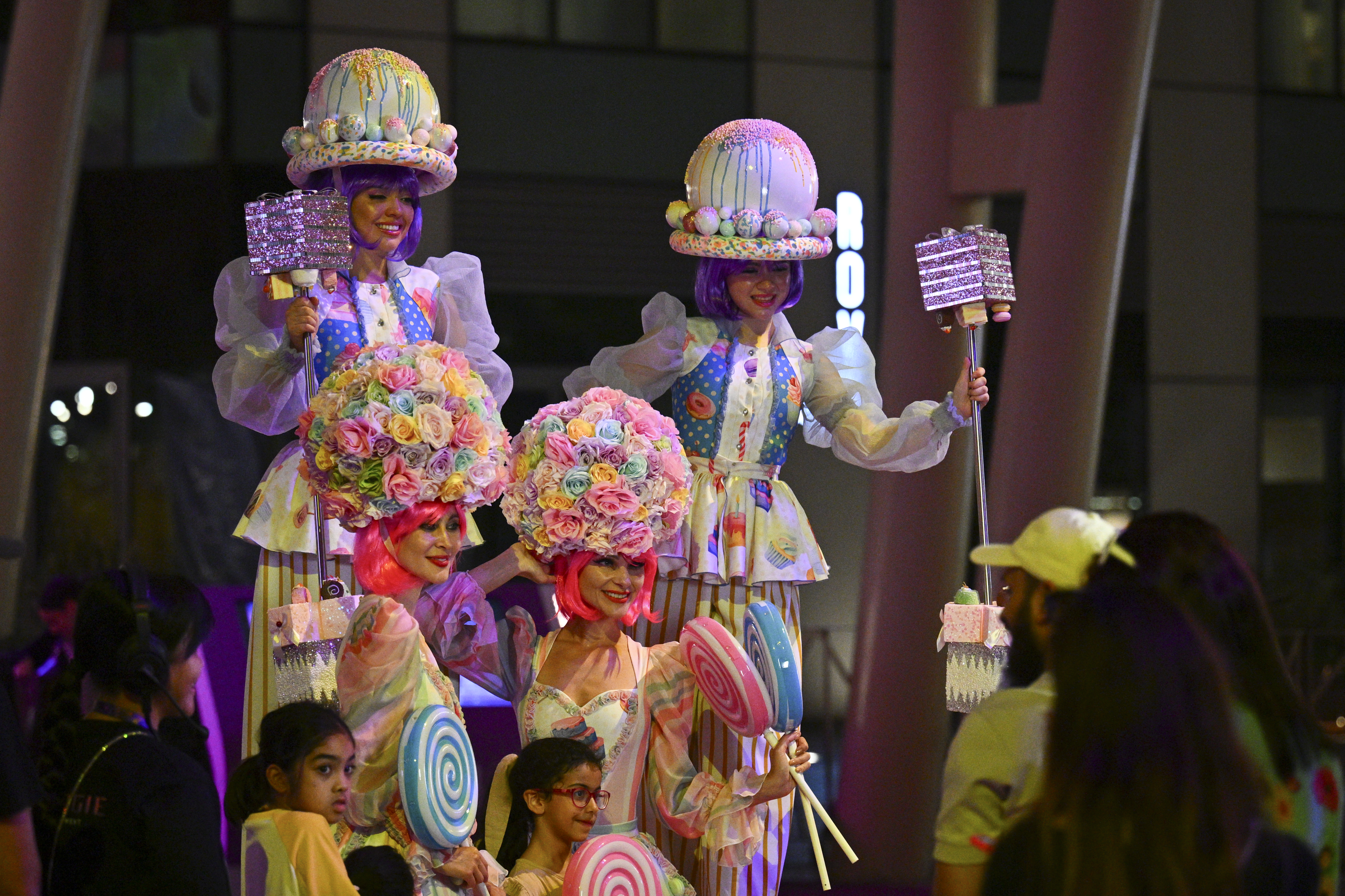
Festival of Cake was conceived as a scalable food-led IP centred on baking culture, chef demonstrations and dessert craftsmanship at Al Wasl Plaza in Expo City Dubai.
The format combined professional and amateur competitions, live demonstrations and hands-on workshops, positioning food as a shared social experience rather than a transactional one. What emerged most clearly was the power of community-led programming. Audiences responded strongest when they felt involved, represented or personally connected to the content on stage.
The event reinforced a broader industry truth: value is no longer defined by scale alone. It is shaped by clarity of offer, relevance to the audience and the opportunity for participation. In live event design, interaction drives memory, and memory drives advocacy, recommendation and organic reach.
Consumer Shift in Live Experiences
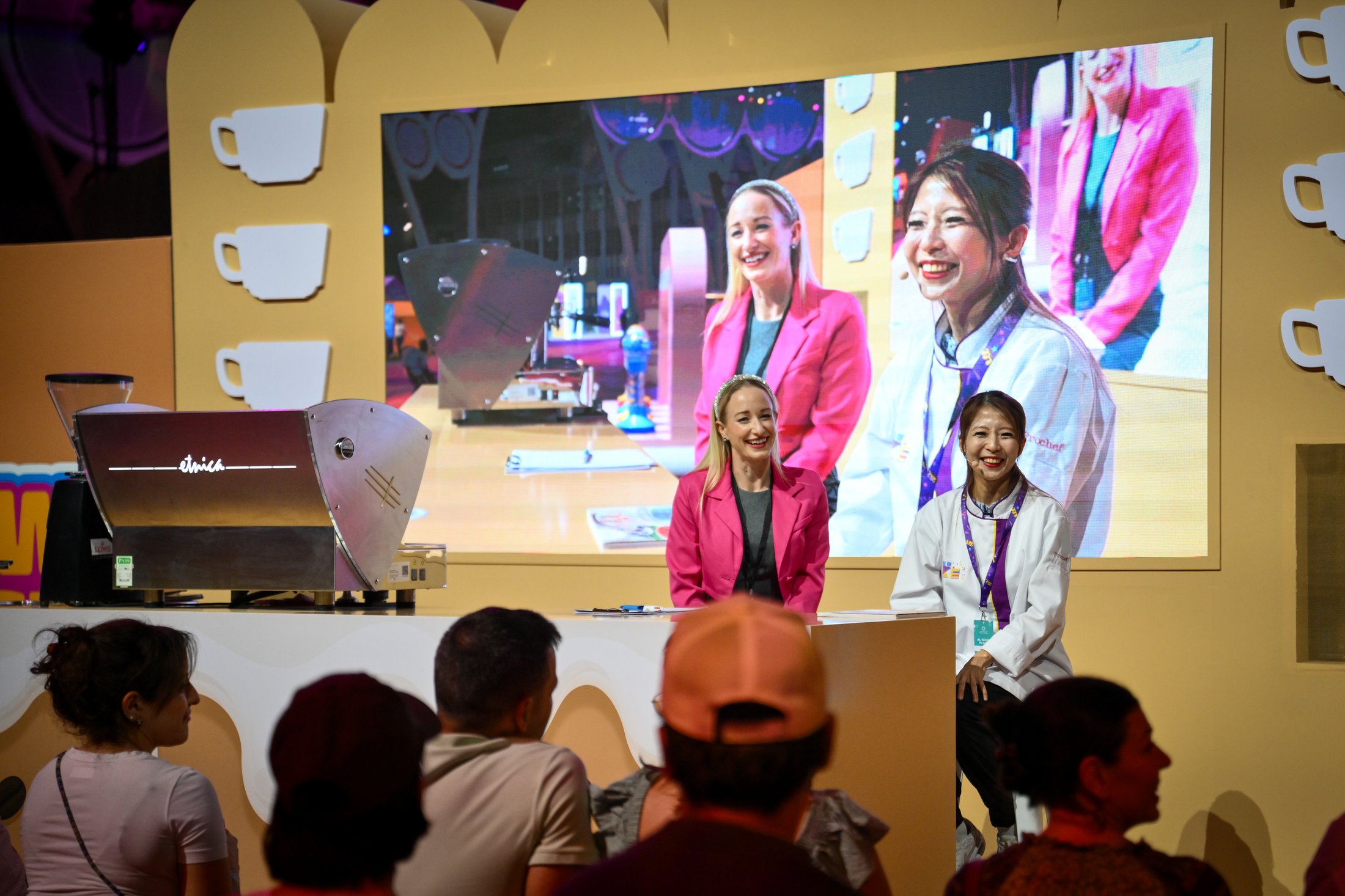
The industry has changed. Audiences are more selective, more time-poor and more value-conscious. They will make attendance decisions based on these factors:
- Clarity – Do I understand what I’m getting?
- Accessibility – Is this easy for me to participate in?
- Comfort – Can I spend time there without friction?
Big production, headline names and spectacle still matter, but they are not only the primary drivers.
Food, however, remains one of the most powerful entry points in live programming. It crosses age groups, cultures and income levels. When structured properly, it also controls pacing, dwell time and social behaviour without needing heavy-handed engagement tactics.
Event Overview: Structure Over Spectacle
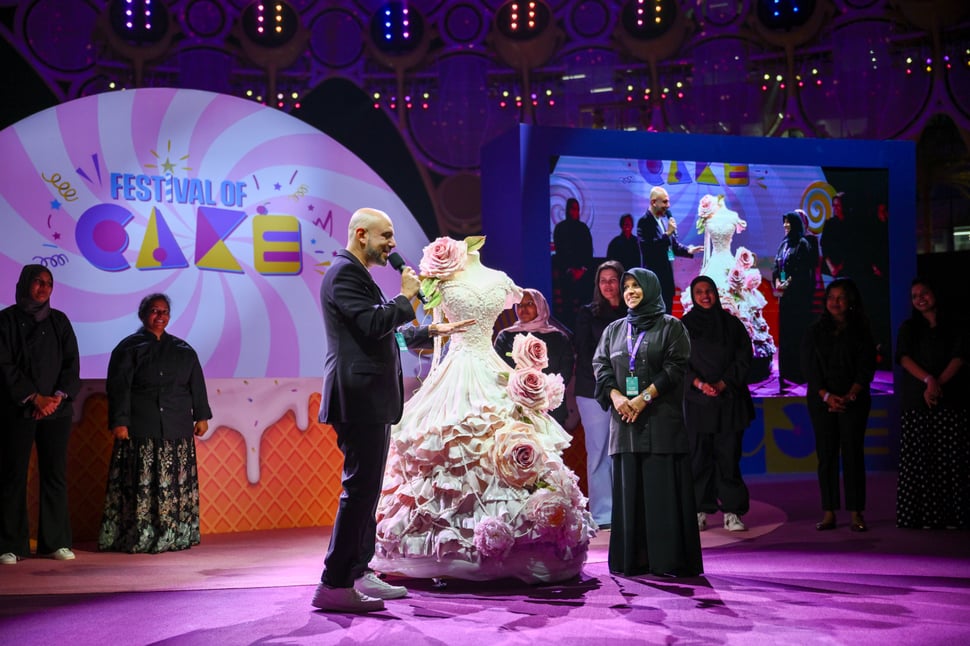
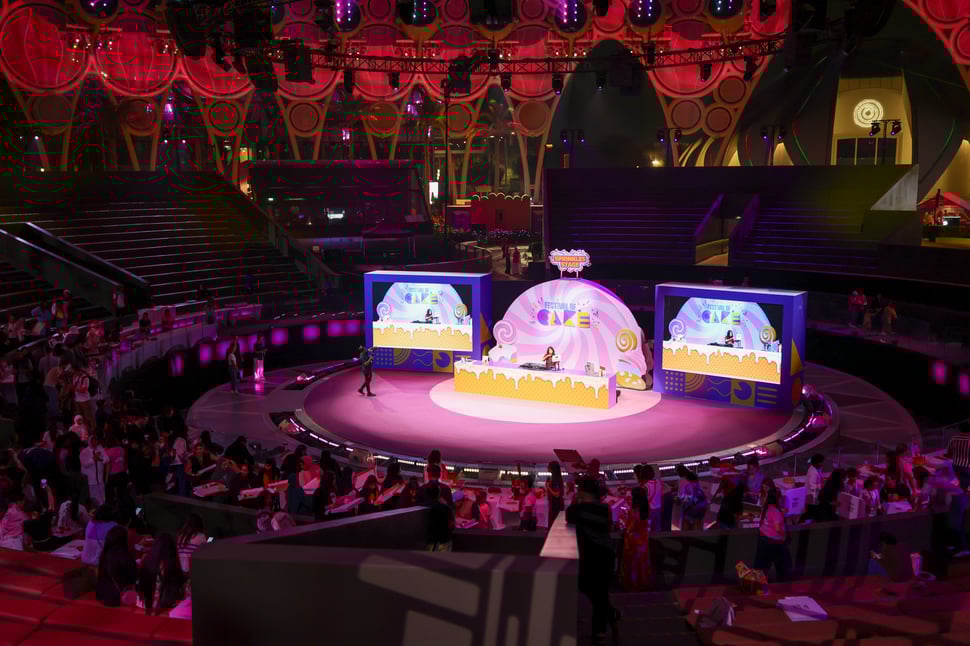
Festival of Cake ran for five days across 110,000 sq ft at Al Wasl Plaza, beneath the scale and visual impact of the Al Wasl dome. The programme included:
- 100+ live demonstrations
- 30 participating dessert brands
- 25 chefs
- A multi-category Bake-Off competition
- Workshops, tasting trails and interactive experiences
While the setting delivered undeniable spectacle, the key design priority was flow.
Visitors were not forced into a fixed journey. They could move freely between stages, competitions and activations, allowing the programme to breathe across the footprint. That flexibility reduced pressure at peak moments, encouraged repeat engagement with headline sessions and extended dwell time organically.
However, operating within a large-format venue also reinforced the importance of wayfinding and spatial clarity. In expansive environments, audience confidence is shaped not just by programming, but by how easily they can navigate it.
The Bake-Off anchored the programme and included professional, amateur and junior categories. By widening participation tiers, the event widened emotional investment. Families didn’t just attend – they came to support competitors.
Concept Development: Familiarity Wins
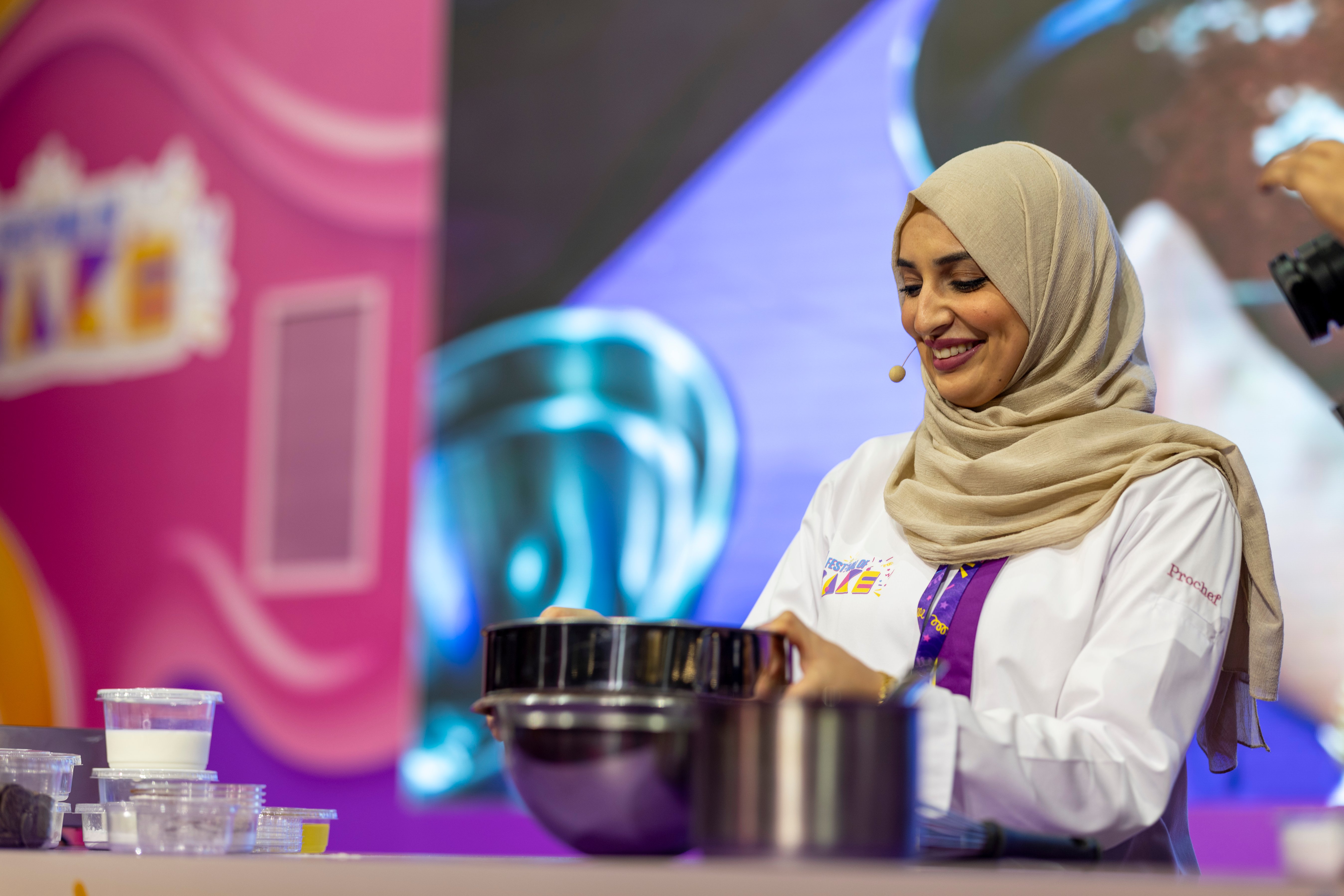
Cake and coffee aren’t niche themes. They are universal rituals.
In event development, familiarity lowers barriers to entry. You don’t need prior knowledge to engage. That matters more than ever.
We layered the programme deliberately:
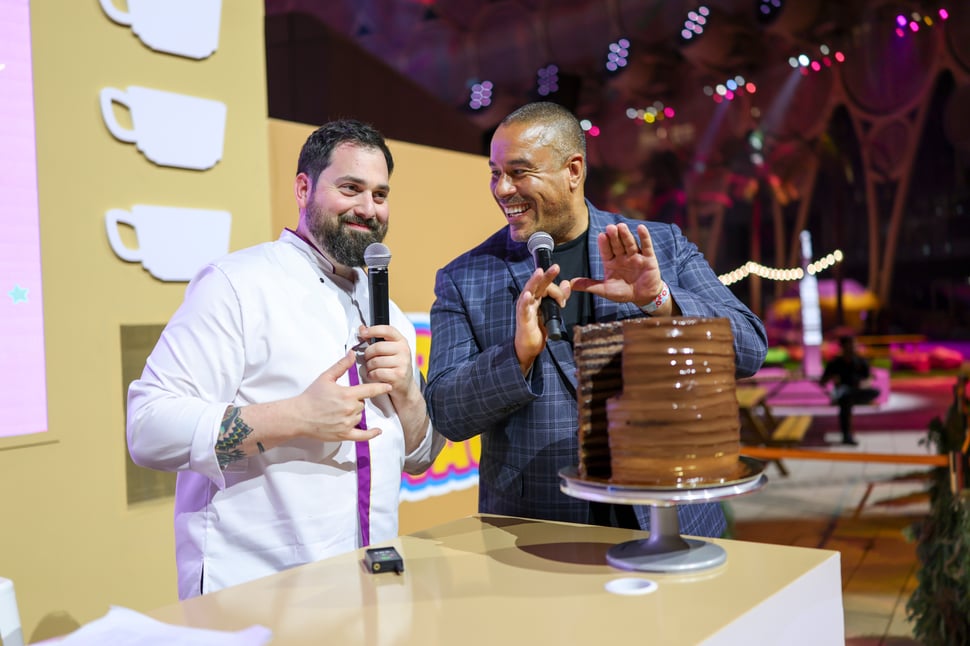
- High-skill chef demos for credibility
- Amateur and junior competitions for relatability
- Informal moments like Cake Picnic for social participation
The takeaway here is simple: design for different comfort levels, as not every guest wants to compete or to watch. Good programming lets them choose.
Marketing: Stop Selling, Start Explaining
One of the clearest insights from Festival of Cake came from pre-event analytics.
The highest-performing content wasn’t hype content it was informational.
Visitors wanted to know:
- What will be included in my ticket?
- What does the space look like?
- How will I spend my time?
Marketing has become part of the experience design.
If your audience can’t visualise their journey, they hesitate to buy. The campaign evolved close to launch to prioritise clarity of inclusions and visitor experience over broad promotional messaging.
The campaign followed a phased model:
- Awareness of the concept
- Education around the experience
- Conversion as intent strengthened
Chef participation played a critical role. Their content bridged digital and live environments, creating familiarity before the event opened building trust with the audience.
Engagement Data: What Actually Drove Performance
The campaign reached over 2.8 million users and generated more than 200 pieces of content. But the important insight isn’t reach, it’s behaviour.
The strongest engagement came from:
- Live competition footage
- Chef appearances
- Interactive workshop previews
In other words: people responded to seeing participation in action.
Ticket sales peaked in the final week prior to the event, reinforcing a consistent pattern in live environments: first-year concepts rely heavily on late-stage social proof before audiences commit.
Post-event feedback showed:
- High satisfaction around discovery and variety
- Strong family appeal
- 90% intent to return or recommend
Interestingly, requests focused on more sampling and clearer activity visibility – which signals not dissatisfaction, but appetite.
What This Means for Destination Programming
 For destinations, retail districts and mixed-use environments, food-led festivals offer three structural advantages:
- Built-in accessibility – Food removes intimidation.
- Repeatable framework – Categories and themes can evolve annually.
- Dwell-time impact – Tastings, demos and workshops naturally extend stay.
Festival of Cake wasn’t just an event, it was a placemaking tool. It demonstrated how culinary programming can drive repeat visitation and community engagement without over-reliance on headline entertainment.
Key Takeaways for Event Owners and Developers
Here are the practical lessons we learned from this project:
- Clarity converts more than spectacle.
- Familiar themes outperform complex concepts.
- Participation tiers broaden emotional investment.
- Marketing must reduce uncertainty, not just build excitement.
- Flow design impacts dwell time more than square footage.
- Community integration determines legacy.
Cultural relevance is not created by scale, but by clarity, trust and participation.
