-1.png?width=3330&height=698&name=TGP%20International%20Logo%20White%20(1)-1.png "TGP International logo")

A hotel’s breakfast is one of the most influential moments in the guest journey. It is often the only F&B touchpoint every guest experience, which means it plays a disproportionate role in satisfaction, reviews and overall perception of value.
Despite this, breakfast is still often approached as a basic operational requirement rather than a strategic driver of value.
When it is done well, it lifts the overall guest experience. When it falls short, it can undermine it, even when other elements of the stay perform strongly.
Below are 10 practical principles for building a stronger, more commercially effective hotel breakfast.
1. START WITH REAL GUEST BEHAVIOUR, NOT ASSUMPTIONS
Breakfast design should begin with how guests actually behave in the morning, not how the kitchen prefers to operate.
Guests split into very different use cases. Some are time-poor and want coffee, toast and eggs within minutes. Others treat breakfast as part of the experience and want to sit, read, meet or relax. Both are valid, and both need to be designed for intentionally.
The mistake many hotels make is designing a single linear journey that assumes everyone wants the same thing at the same speed. The better approach is to design for parallel behaviours: fast-track grab-and-go alongside a more relaxed dining flow.
2. KEEP THE MENU SIMPLE AND INTENTIONAL
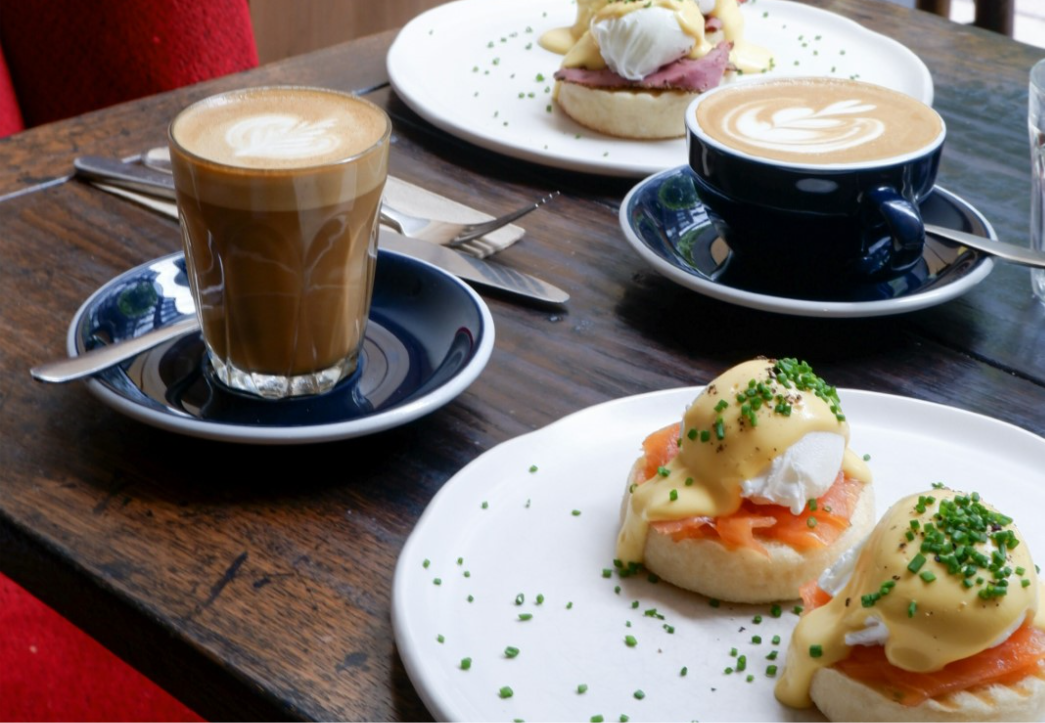
One of the most common issues in hotel breakfast is trying to offer too many items without maintaining consistent quality across them. A large buffet often leads to some dishes being fresh and well prepared, while others sit too long, run out or feel like an afterthought. This creates multiple problems, from increased waste to a drop in overall quality and a more difficult decision-making process for guests.
There is often an underlying assumption that guests want a buffet and, with it, a high level of variety. In some cases that holds true, particularly in certain markets or guest segments. More often, though, what guests respond to is not volume of choice, but clarity and reliability in what is offered.
A more considered approach is to structure variety across categories rather than within each one. This typically means a strong hot core, a simple cold section and a limited number of high-quality additions. Bread, eggs, fruit, yoghurt and cereals form the foundation, with anything beyond that needing to justify its place.
In practice, reducing the number of items while maintaining a clear sense of choice tends to improve both guest satisfaction and operational consistency.
3. DON’T GET YOUR EGGS WRONG
If there is one upgrade that consistently improves breakfast, it is eggs. Eggs are particularly sensitive in a buffet environment. Scrambled eggs, especially, decline quickly under heat lamps and are often one of the first elements guests notice when quality is off.
This is why cook-to-order eggs or a small live station tend to perform better than pre-prepared options. It creates a clear signal of freshness and care, even if the rest of the offer stays the same.
The focus does not need to be on making everything fresh, but on identifying where it makes the biggest difference.
4. CONSIDER LOCALITY AND SEASONAL PRODUCE
A stronger sense of place at breakfast can often start with the produce itself. Building the offer around ingredients that are local and in season can help shape a menu that feels more intentional and, in some cases, easier to execute well. It may also reduce the need to extend the range unnecessarily.
This could mean working with a nearby bakery, incorporating regional dairy or preserves, or using fruit that reflects the season. From there, a smaller number of dishes can build out, rather than trying to cover every option.
Locality does not necessarily need to be stated overtly. When ingredients are relevant to the setting, it often comes through in a way that feels more natural. Guests tend to recognise this difference.
In practice, a more focused menu built around well-sourced produce can feel clearer and more considered, although the right balance will depend on the hotel, its positioning and its guest profile.
5. THINK CAREFULLY ABOUT SPACE AND MOVEMENT
Breakfast is typically one of the highest-flow periods in a hotel, and spatial layout can have a direct impact on how the experience is perceived. In many cases, guest frustration comes less from the food itself and more from how the space functions.
Common pressure points tend to include coffee stations placed in narrow areas, hot food counters clustered too closely together, or unclear routes between different parts of the offer. These can create unnecessary congestion, particularly during peak times.
A useful principle to consider is that guests should be able to move through the space without hesitation or confusion. Where layout supports a natural flow between entry, food selection, seating and exit, the experience tends to feel smoother and more intuitive.
Even small adjustments can make a difference. When guests find themselves waiting without understanding where to go or why, it can quickly affect how the overall breakfast is perceived.
Learn About Our Management Services
6. PRIORITISE QUALITY COFFEE
 Good coffee is one of those details that quietly defines the entire breakfast experience. For many guests, it is the first real moment of the day in the hotel, and it often sets the tone for how everything else is judged. Research increasingly shows that this matters even more to younger travellers, who have grown up in a culture shaped by specialty coffee and café-quality expectations.
A 2025 UK hotel guest survey by Nestlé Professional found that 89% of guests in 4–5 star hotels said coffee quality impacts their overall hotel rating. The influence is particularly strong among younger generations: 75% of Gen Z guests said they are more likely to recommend a hotel that serves a recognised, high-quality coffee brand, while 58% of Gen Z and Millennial guests said they would willingly pay for premium coffee even when a free option is available.
The broader coffee market reflects the same shift. According to the 2025 National Coffee Data Trends report from the Specialty Coffee Association, 64% of adults aged 25–39 drank specialty coffee in the past week, the highest of any age group surveyed.
Younger consumers are also placing greater value on coffee quality overall. Research from Matthew Algie found that 51% of Millennials and 42% of Gen Z consumers say they value good coffee more today than they did before the pandemic, with nearly two-thirds now expecting all coffee to be of a high standard.
This generational shift has changed what guests consider “acceptable” hotel coffee. Today’s Millennial and Gen Z travellers are used to flat whites, oat milk, bean-to-cup machines, and café-style customisation in everyday life, and they increasingly expect the same standard at breakfast. In many cases, poor coffee is no longer viewed as a minor inconvenience, but as a signal that the wider guest experience may also fall short.
If the coffee is weak, lukewarm or inconsistent, it tends to drag the whole experience down with it, even if the food offer is strong. On the other hand, when it is well made, served at the right temperature and consistently reliable, it has a disproportionate positive impact on perception.
This doesn’t necessarily mean it has to be overly complex or heavily barista-led in every setting, but it does need to be treated as a priority rather than an afterthought. Guests are far more forgiving of choice or simplicity than they are of poor quality in something they expect to be good every single time.
Ultimately, getting coffee right is one of the easiest ways to immediately lift the overall standard of a hotel breakfast without changing much else.
7. ELIMINATE SMALL FRUSTRATIONS THAT LOWER GUEST PERCEPTION
Guests are highly sensitive in the morning. Small irritations have an outsized impact. Individually wrapped butter, cluttered tables, unclear labelling or messy condiment stations all create subconscious signals of low quality, even when the food itself is good.
This is where many hotels unintentionally dilute their offer. A clean, minimal, well-presented environment communicates control and care. It also reduces cognitive load for guests, which matters more in the morning than at any other time of day.
8. MAKE PRICING AND INCLUSION PART OF THE VALUE STRATEGY
Breakfast is not just an operational decision. It is a pricing and positioning tool.
Including breakfast in the room rate often increases uptake and simplifies decision-making, particularly in midscale and lifestyle segments. It also strengthens perceived value, even when actual consumption rates vary.
However, in some markets and segments, separate pricing allows for revenue optimisation and segmentation.
The key is consistency. Guests should never feel ambiguity around whether breakfast is worth it or how it fits into their stay value.
The strongest models are simple, transparent and easy to understand.
9. PRIORITISE CONSISTENCY OVER INNOVATION
There is a tendency in hospitality to innovate breakfast before fixing execution. However, this rarely works.
Guests are not expecting reinvention in the morning. They are expecting reliability. Warm food should be warm. Coffee should be fast. Service should be calm and efficient.. Once consistency is embedded, then innovation becomes meaningful.
10. TREAT BREAKFAST AS THE GUEST’S LASTING IMPRESSION OF THEIR STAY
Breakfast is often the last physical interaction a guest has with the hotel before checkout. That means it disproportionately influences final sentiment and review behaviour.
A strong breakfast can elevate an entire stay, even if other elements were average. A poor breakfast can undo a great room experience.
This is why it consistently ranks so highly in guest feedback and online review data.
It is not just a meal. It is the closing chapter of the guest experience.
FINAL THOUGHT
The best operators don’t try to do everything at once. They focus on getting the basics right — clear layouts, smooth flow, consistency, and a few thoughtful details that guests notice.
In a market where it’s harder and harder to stand out, breakfast is still one of the few moments where hotels can really make an impact.
