-1.png?width=3330&height=698&name=TGP%20International%20Logo%20White%20(1)-1.png "TGP International logo")
Events,
Restaurant Concepts,
UK
The single biggest misconception F&B brands have when entering Asia is assuming that what worked elsewhere will work here.
For many, expansion into Asia is seen as a natural next step — often alongside cities such as London, New York or Dubai as part of a broader global growth strategy. However, while the ambition to scale may be consistent, the conditions for success are fundamentally different.
Across projects in both Europe and Asia, I have seen even strong, well-established brands struggle — not because of weak concepts, but because of a misalignment with how Asia actually operates. Expansion into Asia is not a continuation of an existing model.
It requires a deliberate recalibration of how brands are structured, delivered and experienced within a very different commercial and cultural environment.
Asia vs Europe – Regional Differences in F&B Models
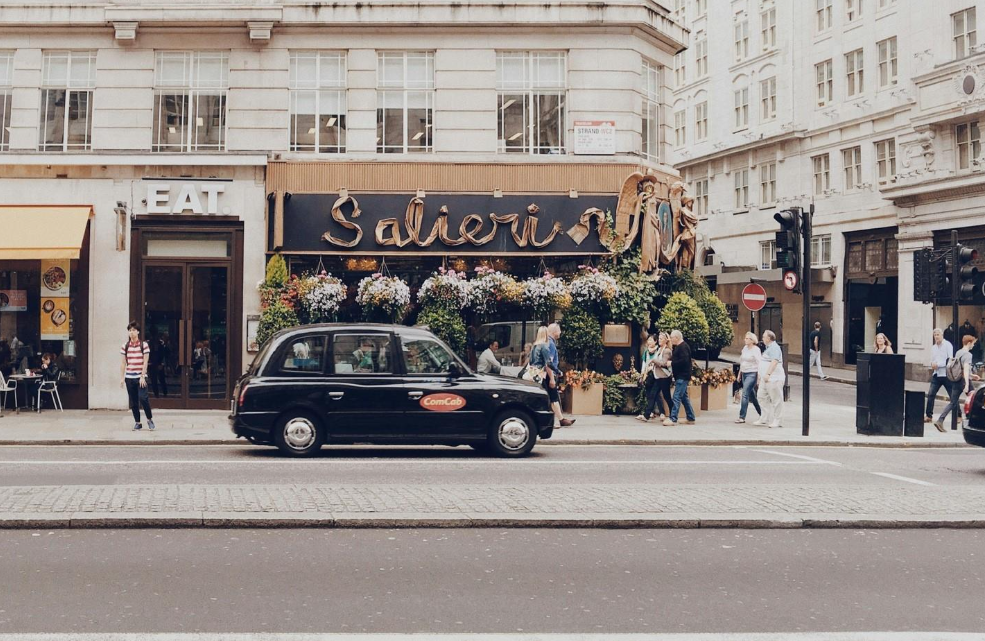
In more established markets such as London or Paris, many F&B brands have been built around strong individual venues and locations, with a clear brand identity and a well-defined customer base.
Similarly, in parts of the Middle East, particularly in cities such as Riyadh and Dubai, there has been rapid evolution in recent years, often within highly curated, developer-led environments where brand positioning and guest experience are carefully controlled.
These contexts offer useful benchmarks, but they are not directly transferable.
In Asia, the operating environment is more layered. Markets are highly fragmented, and consumer expectations can vary significantly even within a single city, whether in Singapore, Bangkok or Jakarta. The pace of development, particularly within mixed-use environments, is also faster and more commercially driven.
Food and beverage is often part of a wider ecosystem rather than a standalone offer.
Many concepts like food halls and hawker centres sit within malls, mixed-use developments or hospitality destinations, where they play a key role in driving footfall, dwell time and overall experience. This changes how success is measured and how brands need to operate.
For brands entering via gateway cities such as Singapore, this becomes immediately apparent. These markets are highly competitive and globally exposed, with consumers who are familiar with international brands and quick to compare experiences. Expectations around quality, design and service are high, but so is the need for relevance and fitting in with your neighbours.
Dining in Asia is also strongly shaped by social behaviour. Peer recommendation, digital visibility and repeatability all play a significant role in success. Concepts need to resonate not only on first visit, but as part of an ongoing lifestyle — where frequency, shareability and perceived value are just as important as the product itself.
In this context, F&B is not simply about a strong standalone concept. It is about how well that concept fits, contributes to and performs within a wider ecosystem.
|
|
Asia |
Europe |
Middle East |
|
Role of F&B |
Part of a wider ecosystem, integrated into retail, hospitality and lifestyle destinations. Often a key driver of footfall and dwell time |
Often a standalone destination, with stronger emphasis on individual venue performance and brand identity |
Integrated within large-scale developments, with F&B used to support destination positioning and guest experience |
|
Location Model |
Dominated by malls, mixed-use developments and lifestyle hubs, particularly in urban centres |
High street, neighbourhood and independent venues more common, with some mixed-use in major cities |
Mall-led and destination-driven, with strong developer and landlord influence |
|
Consumer Behaviour |
High frequency, social and group-oriented dining. Strong influence of peer validation and digital sharing |
More occasion-led or purpose-driven, with stronger emphasis on reservation culture in many markets |
Social and experience-led, often tied to premium environments and peak trading periods |
|
Footfall Driver |
F&B is a primary driver of visitation in many developments, often used to anchor destinations |
Footfall is more evenly distributed, with strong locations and concepts acting as standalone draws |
F&B supports footfall within curated environments, often aligned to broader entertainment and retail strategy |
|
Brand Adaptation |
High need for localisation across menu, format and experience, even within the same city |
Greater consistency across locations is often possible, with less need for structural adaptation |
Adaptation required, but within defined frameworks set by landlords, operators or brand partners |
|
Operational Impact |
Operations must align with high traffic volumes, extended trading hours and integration with surrounding tenants |
Greater operational control over pacing, service style and trading model |
Operations influenced by landlord requirements, peak demand cycles and destination-driven traffic |
These observations are not definitive, but reflect patterns I’ve seen across projects in different regions, and can serve as a useful reference when approaching new markets.
What Still Translates
Despite these differences, some fundamentals remain consistent across regions.
Strong concepts still matter. Clarity of positioning, quality of execution and consistency in delivery continue to underpin success. Brand identity remains critical, particularly in high-density markets where competition is intense.
However, the application of these fundamentals needs to evolve.
In Asia, brand strength is often tested not just at the level of the concept, but in how well it integrates within a wider ecosystem, whether that is a mall, a mixed-use development or a hospitality-led destination.
Key Operational Considerations When Entering Asia
From an operational perspective, several areas require early and deliberate focus.
Localisation Beyond the Menu
Localisation is often approached through menu adaptation, but in practice it extends across the entire customer experience.
In Asia, localisation typically operates across multiple layers:
- Menu composition and flavour profile
- Pricing psychology and perceived value
- Service style and pacing
- Spatial design and table configuration
- Social and group dining behaviour
Dining is often more frequent, more social and more fluid across dayparts. Concepts need to reflect this not only in what is served, but in how the space functions and how the experience flows.
Brands that localise only at menu level may fail to resonate, as compared to those that adapt across the full operating model.
Supply Chain And Sourcing Reality
Ingredient integrity is central to many brands, particularly those with a quality or wellness-led positioning. However, supply chains can vary significantly from European benchmarks.
Ensuring consistency requires alignment between menu design, supplier availability and kitchen capability from the outset. Without this, brands risk either diluting their proposition or creating operational inefficiencies.
Labour Structure And Training
Labour dynamics differ widely across Asia in terms of availability, cost and experience. Training frameworks need to be adapted, workflows simplified and operational standards recalibrated to ensure consistency is achievable.
For wellness-led concepts, this becomes even more critical, where ingredient knowledge, preparation and guest communication are part of the experience.
Integration Within Mixed-Use Environments
A significant proportion of F&B in Asia operates within malls, mixed-use developments or hospitality-led destinations. Unlike standalone European high street models, success is often linked to footfall patterns, tenant mix and overall asset strategy.
Brands need to be designed to function within these ecosystems, not independently of them.
Speed To Market And Performance Expectations
Markets in Asia tend to move quickly. Opening timelines can be compressed, with a strong expectation for early traction.
This places pressure on pre-opening readiness, from design coordination and procurement through to recruitment and training. Operational clarity at feasibility stage is essential.
Standing Out in a Sea of Sameness
Many Asian markets are highly saturated, particularly within malls and lifestyle hubs where multiple concepts compete side by side.
In this environment, being “good” is rarely enough. Concepts need to stand out clearly - in positioning, design and overall experience, or risk being overlooked.
At the same time, trend cycles move quickly. What may feel unique at launch can become widely replicated within a short period, especially in markets driven by social media and rapid concept turnover.
Brands need to be built not just for initial buzz, but for sustained relevance.
In Asia, differentiation is not optional - it is survival.
Wellness as a Converging but Distinct Driver
One area where global alignment is particularly visible is wellness.
However, in Asia, wellness is often less of a new introduction and more of a continuation of existing cultural frameworks. Practices around balance, nourishment and preventative health are already embedded in many markets.
For brands entering the region, particularly those positioning around wellness, this requires a more considered approach.
Wellness cannot be layered on. It needs to be operationalised through menu architecture, sourcing, spatial design and service.
In markets where consumer awareness is high, the distinction between credible integration and surface-level positioning becomes more apparent.
At the same time, wellness in Asia is evolving into a more integrated lifestyle proposition. It is no longer confined to niche segments, but is increasingly intersecting with mainstream dining, fitness, recovery and hospitality. Concepts that successfully bridge these elements — for example, combining functional nutrition with experiential dining, or integrating F&B within a broader wellness ecosystem — are gaining stronger traction.
Where Brands Typically Struggle
In practice, several recurring challenges emerge.
Replication without adaptation is one of the most common. Concepts are often introduced with minimal adjustment, leading to a disconnect between brand intent and local behaviour.
Overcomplication is another. In attempting to differentiate, brands may introduce menus or operational models that are difficult to execute consistently within local constraints.
There is also a tendency to underestimate the importance of ecosystem alignment. A strong concept may still underperform if it does not fit within the dynamics of its location, particularly within mixed-use environments.
A More Structured Approach to Entry
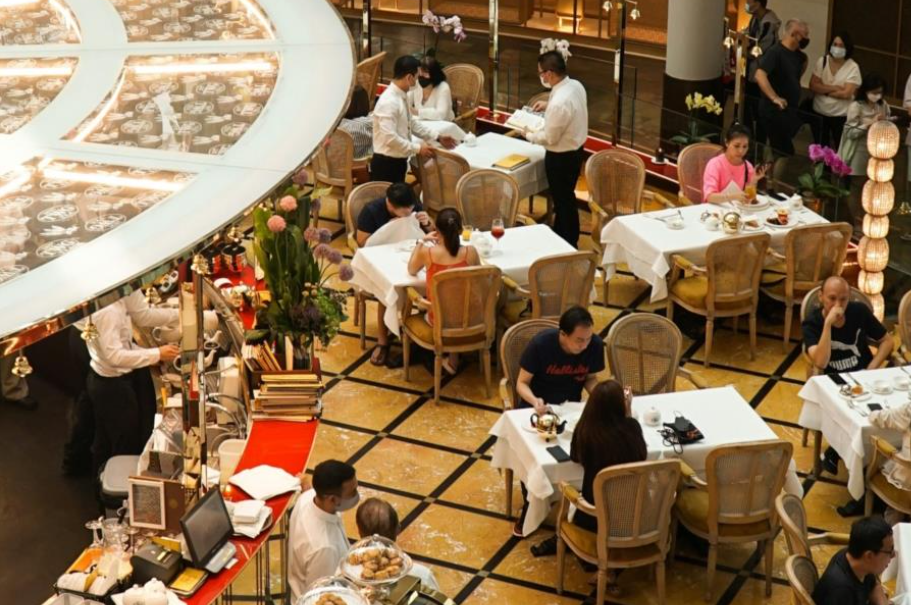
For brands entering Asia, a more structured approach is required.
Gateway markets such as Singapore can play an important role, not just as launch locations, but as operational benchmarks. They provide an opportunity to test, refine and establish a model that can then be adapted for other markets across the region.
This requires a shift in how expansion is approached.
Feasibility, site context, supply chain mapping and labour modelling should inform concept development from the outset. Alignment across concept, design, F&B strategy and operations is essential.
There also needs to be clarity on what remains constant and what evolves. Brand identity should be protected, but its expression must be flexible enough to respond to local conditions.
Asia Is Not One Market
It is also important to recognise that Asia is not a single, unified market.
China, Southeast Asia and other developed markets in Asia each operate with distinct consumer behaviours, regulatory environments and competitive landscapes.
Entry strategies, partnership models and brand positioning need to be tailored accordingly. A model that works in Singapore may not directly translate to Kuala Lumpur or Jakarta, and will differ even more significantly when entering China.
Treating Asia as a single market often leads to oversimplification — and ultimately, underperformance.
Practical Takeaways for F&B Brands Entering Asia
- Use gateway cities such as Singapore as operational benchmarks, not just flagship locations
- Start with operational feasibility, not just concept strength
- Design menus around local supply chain capability, not aspiration alone
- Adapt service style and spatial design to local dining behaviours
- Plan for integration within mixed-use or retail-led environments
- Simplify workflows to align with local labour dynamics
- Treat wellness as an operational system, not a positioning layer
- Balance global brand consistency with local relevance
- Ensure your concept is immediately clear and easy to understand within the first interaction
- Build for repeatability, not just initial buzz or launch traction
- Define your core identity early, but allow flexibility in execution across different markets
