-1.png?width=3330&height=698&name=TGP%20International%20Logo%20White%20(1)-1.png "TGP International logo")
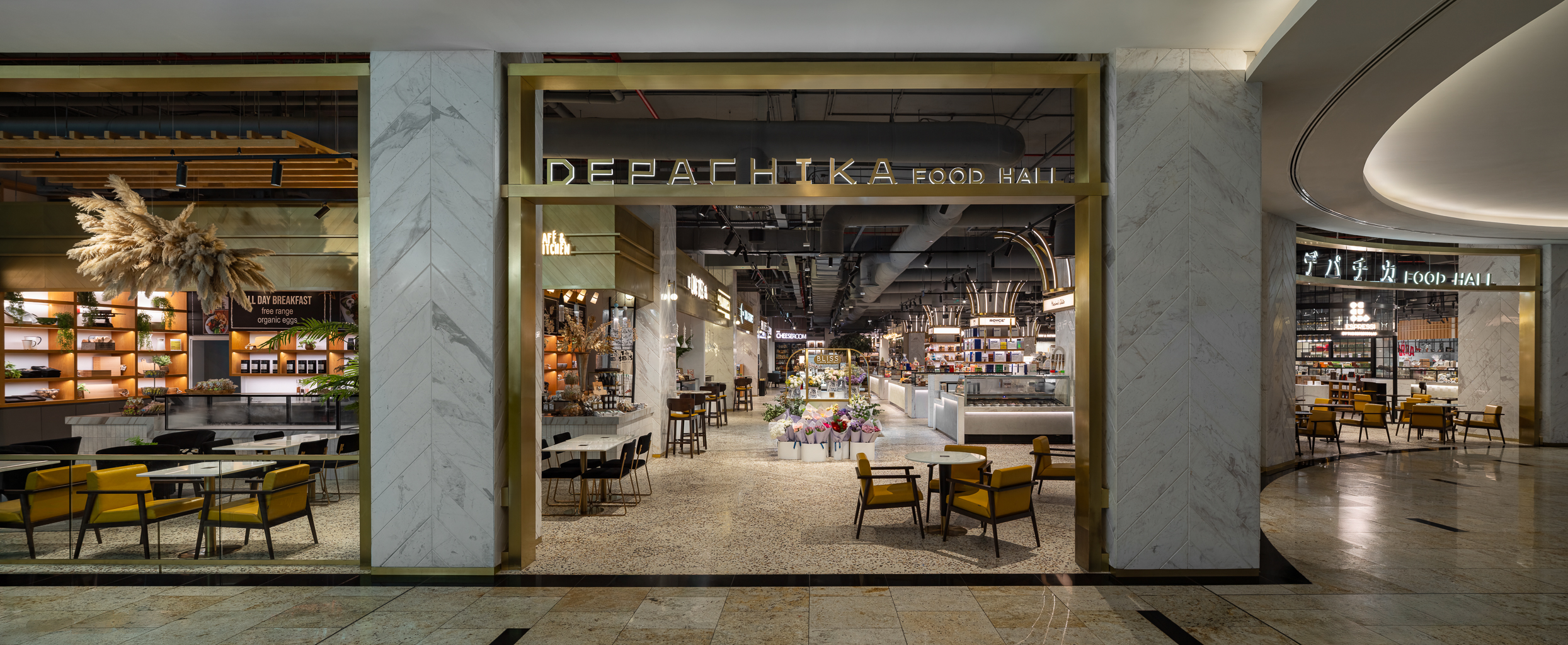
Food halls have moved far beyond the convenience-led dining of food courts. Across global cities, they are increasingly part of how people experience a place, particularly when travel plans are shaped around what and where to eat.
For travellers, they are no longer incidental stops but planned destinations, often positioned alongside museums, landmarks and cultural districts. This is reflected in how trips are organised, with food halls researched in advance, saved and shared as a way to access multiple local or established brands in one visit.
KEY TAKEAWAYS
- Culinary tourism is expanding rapidly, with the wider market valued at around USD 1.2 trillion in 2025 and forecast to exceed USD 4 trillion by 2034, driven by experience-led travel and the growth of urban food culture
- Food-specific travel is accelerating as a distinct category, projected to grow from roughly USD 16 billion in 2025 to over USD 75 billion by 2033
- Traveller behaviour reflects this shift, with over 80% of travellers prioritising food experiences, more than half identifying as food-driven, and up to 1 in 5 selecting destinations based on specific culinary offerings
- Food and beverage accounts for a significant share of travel spend, typically between 25% and 35%, making it one of the largest discretionary categories within tourism
- Food halls align closely with these patterns, offering a condensed way to access multiple brands, cuisines and formats within a single visit, particularly suited to shorter stays and group travel
- Scalable models such as Time Out Market Lisbon demonstrate how curated, editorial-led approaches can translate across cities including London, New York and Dubai
- Established destinations like Borough Market and Mercado de San Miguel continue to rank among the most visited attractions in their cities, reinforcing the role of food-led destinations as part of urban infrastructure rather than purely commercial venues
- Overall, food has shifted from a supporting element of travel to a primary driver, with food halls acting as concentrated, accessible expressions of local culture and identity
WHY FOOD HALLS RESONATE WITH TOURISTS
At their core, successful food halls operate as condensed expressions of culinary identity. Rather than committing to a single restaurant or cuisine, visitors can move through a curated mix of operators in one place. This makes them particularly effective for visitors who want to experience more within a limited amount of time.
- Curated mix of cuisines and operators within a single destination
- Efficient way to explore local and international food in one visit
- “Try more, commit less” approach to dining
- Exposure to a broader range of formats, price points and culinary styles
The social layer is just as important. Layout and service formats shift dining from a private activity to something more visible and shared. Open kitchens and communal seating change how people engage with the space and with each other.
- Open kitchens that bring visibility to preparation and process
- Shared seating that supports more flexible, social dining
- Food preparation as part of the experience, not just the outcome
- Greater sense of participation, moving beyond passive consumption
THE LINK TO NATIONAL FOOD CULTURE
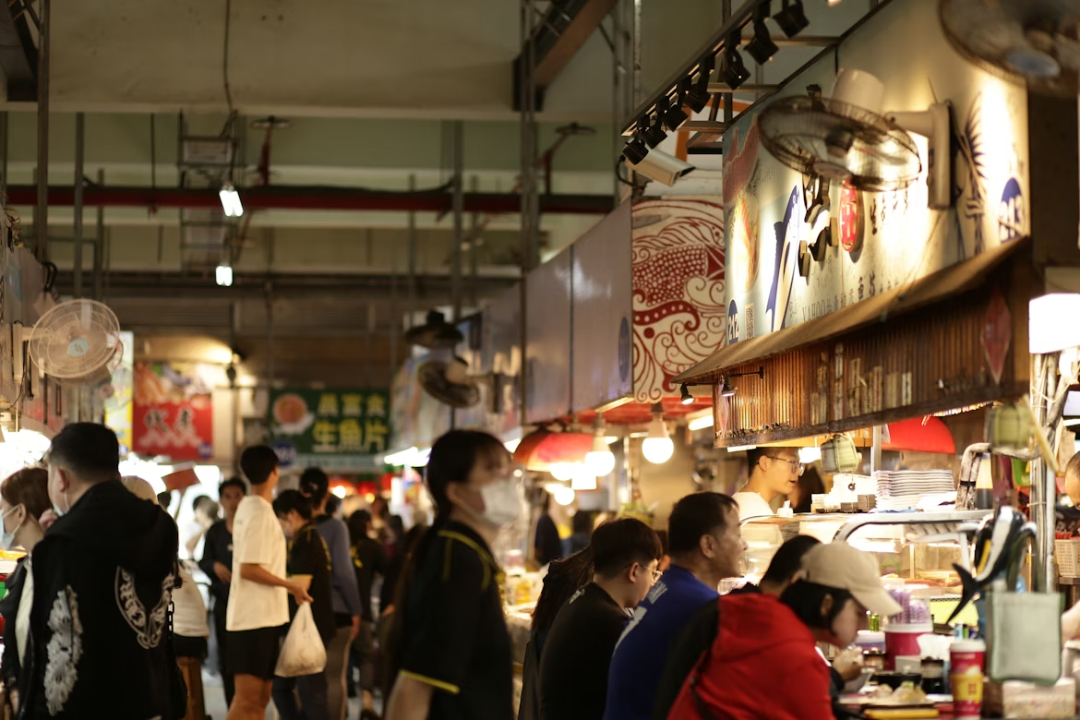
The most effective food halls are those that are rooted in place. They do not rely on replication of global formats. Instead, they reinterpret them through local identity, producing spaces that feel both contemporary and culturally specific.
In practice, this comes down to how local context is reflected. Regional brands, ingredients and emerging talent sit alongside more familiar or international names, creating a mix that feels relevant to both local audiences and visitors. The aim is not to standardise the experience, but to reflect what makes that location distinct in a way that is easy to engage with.
This balance between authenticity and accessibility is where food halls tend to perform best. It is also where design and curation move beyond aesthetics, shaping how people understand and connect with a place through food.
INTERNATIONAL BENCHMARKS
|
Al Mamlaka Social Dining
|
Benchmarked by Euromonitor and other global data sources as one of the leading food hall destinations in Saudi Arabia, Al Mamlaka reflects how the format is evolving within the local market. Positioned within a prime retail and lifestyle setting in Riyadh, it brings together a broad mix of regional and international brands under one roof, structured to appeal to both local audiences and visitors. Its strength lies in the balance between familiarity and discovery, with established local concepts alongside international names, supported by a layout that encourages movement, shared use and repeat visits. The result is a social, flexible environment that reflects how food halls are being used today, not just for dining, but as a way to engage with a broader, more varied food culture in a single setting.
|
|
Depachika
|
Depachika Food Hall at Nakheel Mall, Dubai is a curated culinary marketplace combining dine-in experiences with artisanal retail. Inspired by the Japanese “depachika” format, the concept places equal weight on variety, quality and presentation, interpreted through Dubai’s preference for range, visual appeal and premium positioning. It operates as a flexible platform, bringing together a mix of vendors across distinct pods. Each retains its own identity, while contributing to a consistent overall experience shaped through layout, curation and presentation. The result is a food hall that balances individual expression with cohesion, aligning with how the format is being adapted in markets where diversity and presentation play a central role in how people choose where to eat.
|
|
Lisbon Timeout
|
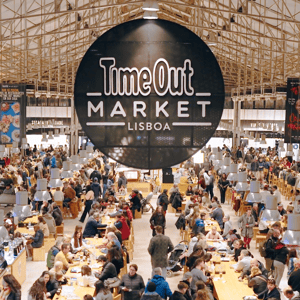
Time Out Market Lisbon brings together a curated mix of Portugal’s chefs, restaurants and bars within the historic Mercado da Ribeira, one of Lisbon’s best-known market buildings. Opened in 2014 by the Time Out Portugal team, the concept combines communal dining with a strong editorial approach to selection, bringing recognised local operators together in a high-energy shared environment. Its influence comes from how it balances accessibility with curation. Rather than functioning as a traditional collection of independent stalls, the market is structured around showcasing what Time Out defines as some of the city’s strongest food and drink concepts, creating a destination that feels closely tied to Lisbon’s dining culture while remaining easy to navigate for visitors.
The success of the Lisbon venue also established the foundation for the wider Time Out Market expansion into cities including New York, Boston, Montreal and Dubai.
|
|
El Nacional Barcelona
|
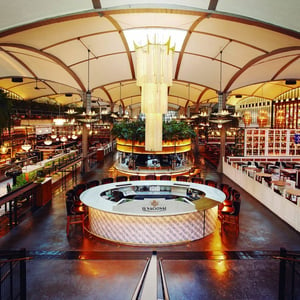
El Nacional is a multi-space food hall on Passeig de Gràcia that brings together several restaurants and bars, each focused on Spanish and Catalan gastronomy. Housed within a restored industrial-style building, it combines strong architectural identity with a format that encourages movement between different dining experiences rather than a single, fixed setting. Its strength lies in how this variety is structured. Distinct zones, from tapas and seafood to meat and wine bars, allow guests to navigate the space based on mood or occasion, while maintaining a consistent atmosphere across the venue. It reflects a more defined approach to the food hall model, where multiple concepts sit within a shared environment, balancing flexibility with a clearer sense of structure and identity.
|
|
Borough Market
|
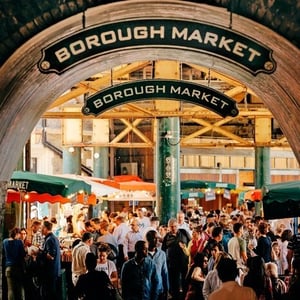
Borough Market is one of London’s oldest and most recognised food markets, known for its strong mix of produce traders, artisan vendors and street food operators. Located near London Bridge, it draws a wide audience ranging from local shoppers and chefs to visitors exploring the city’s food scene. What gives Borough Market its longevity is the way it has evolved without losing its core identity. Independent traders, specialist produce and longstanding market traditions remain central, while newer food concepts continue to broaden its appeal. The result is a market that feels active and commercially relevant, while still closely tied to the character and rhythms of the surrounding area.
|
|
Nishi Market Kyoto
|
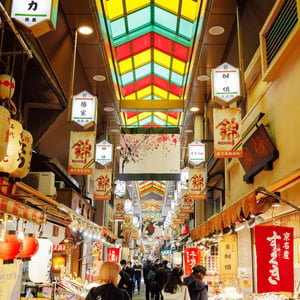
Nishiki Market in Kyoto is a narrow, covered market street often referred to as “Kyoto’s Kitchen,” lined with long-standing stalls and specialist shops selling local produce, seafood, pickles and traditional snacks. It provides a concentrated view of the city’s food culture, with a strong emphasis on seasonality and regional craft. Unlike more contained food hall environments, Nishiki is organised as a continuous street, encouraging a steady flow of movement. Visitors engage with the space in stages, stopping briefly across multiple vendors, creating an experience shaped by sequence and discovery rather than a single, fixed point of dining.
|
|
Maxwell Centre Singapore
|
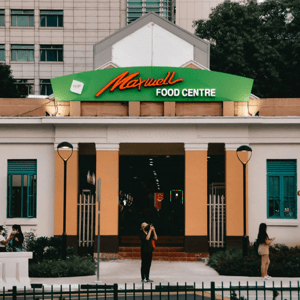
Maxwell Food Centre is one of Singapore’s most recognised hawker centres, located in Chinatown and popular with both locals and visitors. It is known for its wide range of affordable street food, from chicken rice to a broader mix of local dishes, served within a busy communal setting that reflects the everyday rhythm of the city. It is also one of many examples of Singapore’s hawker centre model, a format closely tied to the country’s identity and recognised by UNESCO as part of its intangible cultural heritage. Built around specialist independent stalls, high turnover and shared seating, the model prioritises accessibility and consistency, creating an environment where everyday use and tourism sit naturally alongside each other.
|
|
Alkebulan
|
Alkebulan is a Pan-African dining concept at Expo City Dubai, positioned as a celebration of African cuisine, culture and hospitality within a shared dining environment. It brings together a range of regional influences, from traditional dishes to more contemporary interpretations, reflecting the diversity of the continent’s food culture. As a multi-operator format, it shows how food halls can be used to present a broader regional narrative under one roof. Different cuisines and culinary perspectives sit alongside each other, creating a space that introduces visitors to a wide spectrum of flavours while maintaining a cohesive identity built around cultural expression and storytelling.
|
AL MAMLAKA SOCIAL DINING AS A CULTURAL AND TOURISM DESTINATION
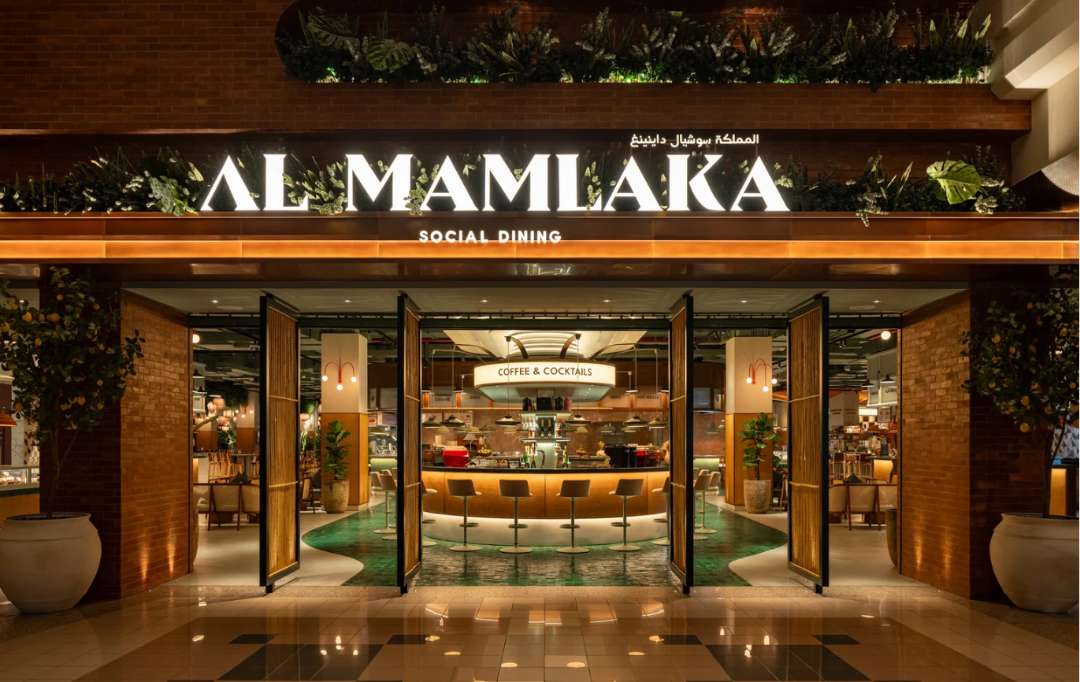
Developed by TGP International within the Kingdom Centre, the project was conceived as a destination-led food hall that reflects both the pace of change in Saudi Arabia and the expectations of a more globally exposed audience.
From the outset, the intention was to move beyond a conventional food court format and create a social dining environment with a stronger sense of identity. Within the context of Vision 2030 and a rapidly evolving hospitality landscape, Al Mamlaka was positioned as a platform for both local brands and international operators, bringing them together in a way that feels relevant to the market today.
A key part of this is how Saudi culinary identity is introduced. Local concepts are given prominence within the overall journey, particularly at entry points and high-visibility locations, helping to establish a clear sense of place from the start. Alongside this, international brands provide familiarity and range, creating a balance that supports both first-time visitors and regular use.
The layout supports this mix. Open kitchens, varied seating and clearly defined zones allow the space to shift across different dayparts, from more casual daytime use to busier evening periods. Movement through the venue is intuitive, encouraging guests to explore without losing clarity.
Flexibility is built into the model. Pop ups, seasonal activations and the ability to rotate operators allow the venue to evolve over time, keeping the offer current and encouraging repeat visits. This adaptability reflects a broader approach, where long-term relevance is driven not just by the initial concept, but by how the space is managed and refreshed in use.
Read More About Al Mamlaka Here
FOOD HALLS AS PLATFORMS FOR CULINARY TOURISM
The food hall model has already proved its value in cities where food plays a visible role in how visitors experience place. Concentrated, multi-offer environments allow people to engage with a local food scene quickly, particularly where time is limited and expectations are high.
To extend this further, food halls need to sit within a broader network of influence. Their impact is typically stronger where there is some level of alignment between developers, operators, local stakeholders and tourism agendas, even if this is not formally coordinated. This shared direction helps position the food hall as part of a wider narrative around place, rather than an isolated commercial offer.
In this context, food halls can operate as platforms for culinary tourism. They introduce visitors to local producers, chefs, ingredients and formats in a single setting, while also supporting wider objectives such as talent development, brand incubation and the visibility of national cuisine. Their role sits between commercial performance and cultural representation, requiring both to be considered together.
CURATING FOR CULTURAL IDENTITY
Curation is where much of this value is defined. The mix of operators, formats and price points needs to work as a system, shaping how visitors engage with the space and how local food culture is presented.
- Establish a clear point of view on local identity, ensuring regional brands, ingredients or formats are meaningfully represented
- Balance this with recognisable or accessible concepts that help broaden appeal without diluting the overall offer
- Avoid repetition in cuisine or format, maintaining contrast to encourage movement and exploration
- Consider how different vendors perform across dayparts, building a mix that supports consistent activity
- Use spatial positioning to guide perception, placing key or local concepts in high-visibility areas
- Allow for flexibility through pop ups, seasonal rotations or short-term residencies to keep the offer current
- Create pathways for emerging talent, using the format as a testing ground for new concepts before scaling
The outcome is not just a collection of operators, but a structured experience. When done well, curation supports both commercial performance and longer-term development, helping food halls function as active, evolving representations of a city’s food culture.
BEYOND TREND TO CULTURAL ANCHOR
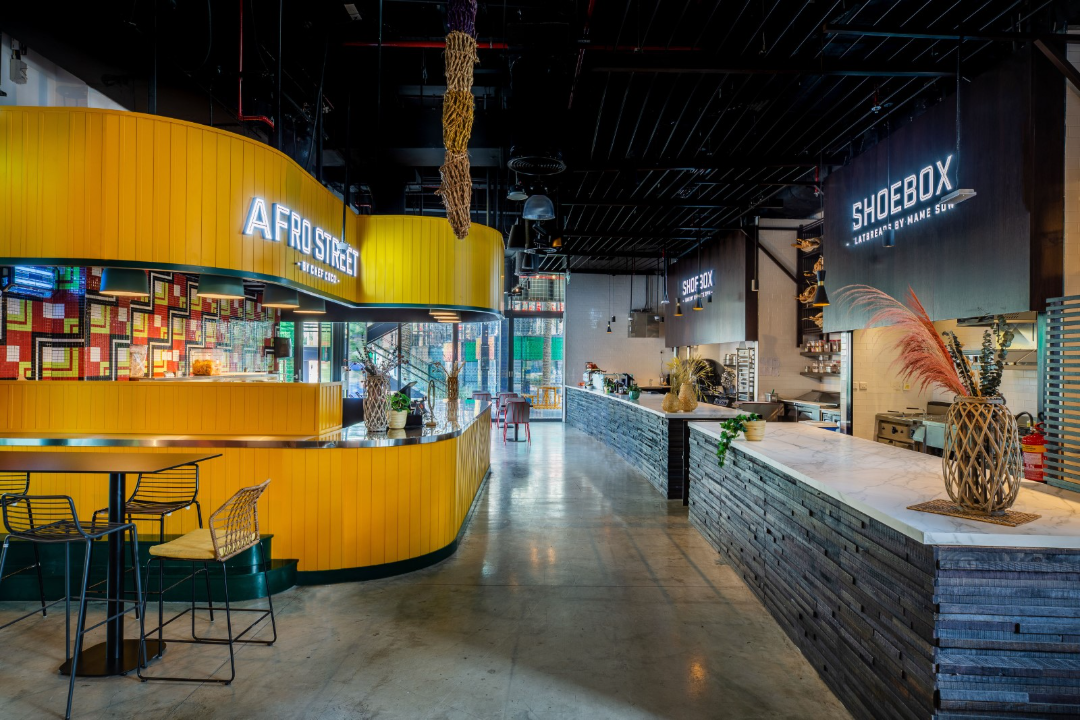
The rise of food halls within gastrotourism reflects a broader shift in how people travel and how they engage with place. These environments work because they offer more than access to food. They provide a structured way to experience local culture, combining interpretation, atmosphere and ease of use within a single setting.
- Growing demand for experience-led travel, with food acting as a primary driver
- Increased interest in local identity, provenance and context within dining
- Preference for formats that bring multiple experiences together in one place
- Ongoing overlap between hospitality, retail and cultural programming
Projects such as Al Mamlaka Social Dining illustrate how this can be applied in practice. When grounded in local context, supported by clear operational thinking and designed around how people actually use the space, food halls can take on a broader role within a city’s landscape.
- Integration of local identity across both concept and spatial design
- Operational models that allow for consistency while supporting change over time
- Layouts that encourage interaction, movement and repeat use
- Positioning as part of a wider destination, rather than a standalone venue
